Background
I am a French architect and entrepreneur who has spent more than twenty years refining a practice rooted in bioclimatic design and low-carbon construction. Today I oversee three architecture offices — in Hong Kong, Vietnam and France — as well as a startup dedicated to crafting prefabricated lodges for the eco-luxury hospitality industry worldwide.
My journey began with architectural studies in France and Sweden, later deepened by a postgraduate specialization in heritage preservation in Paris, where I developed a particular affinity for the Maghreb and the Middle East, notably Egypt and Syria. Working alongside UNESCO on bioclimatic projects and heritage conservation gave me a profound appreciation for climate-responsive building traditions.
That appreciation is what drew me to Southeast Asia — a region whose explosive urban growth and dynamic construction sector demand urgent solutions. My mission here is to bridge ancestral wisdom and contemporary innovation, ensuring that progress does not come at the expense of resources, energy or human wellbeing.
Why This City
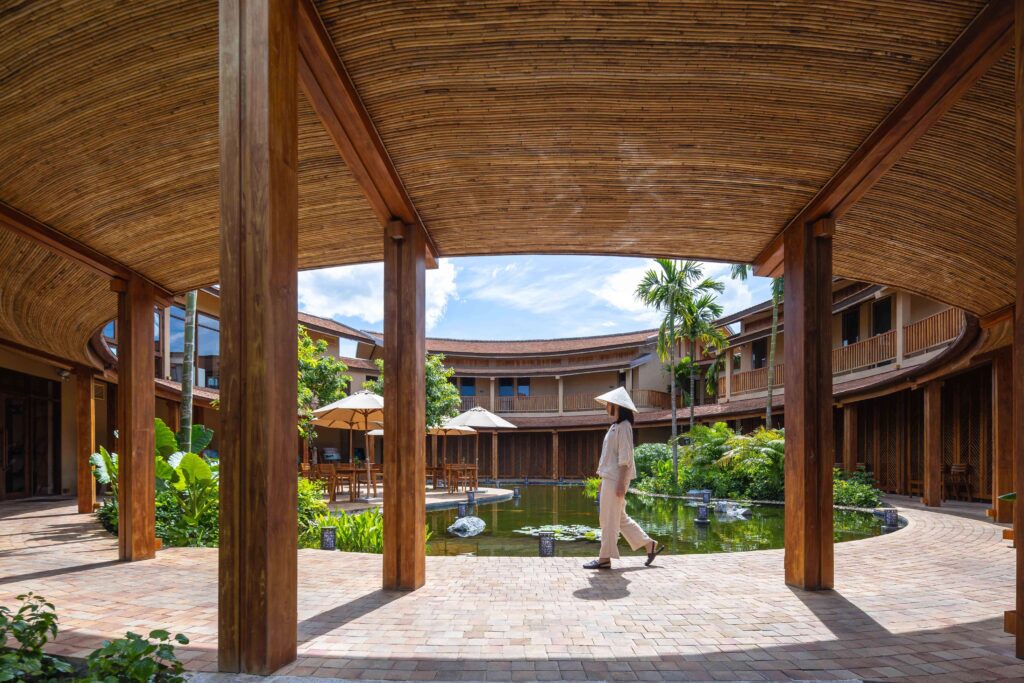
I first led an NGO in Saigon from 2003 to 2005, working to reduce urban poverty through microfinance programs, housing improvements and the relocation of communities living in slums. I then returned to France and founded an architecture firm specializing in bioclimatic and passive design, which I ran from 2005 to 2010. I learned the craft hands-on in those years, delivering projects that were considered innovative at a time when environmental concerns had yet to capture widespread public attention.
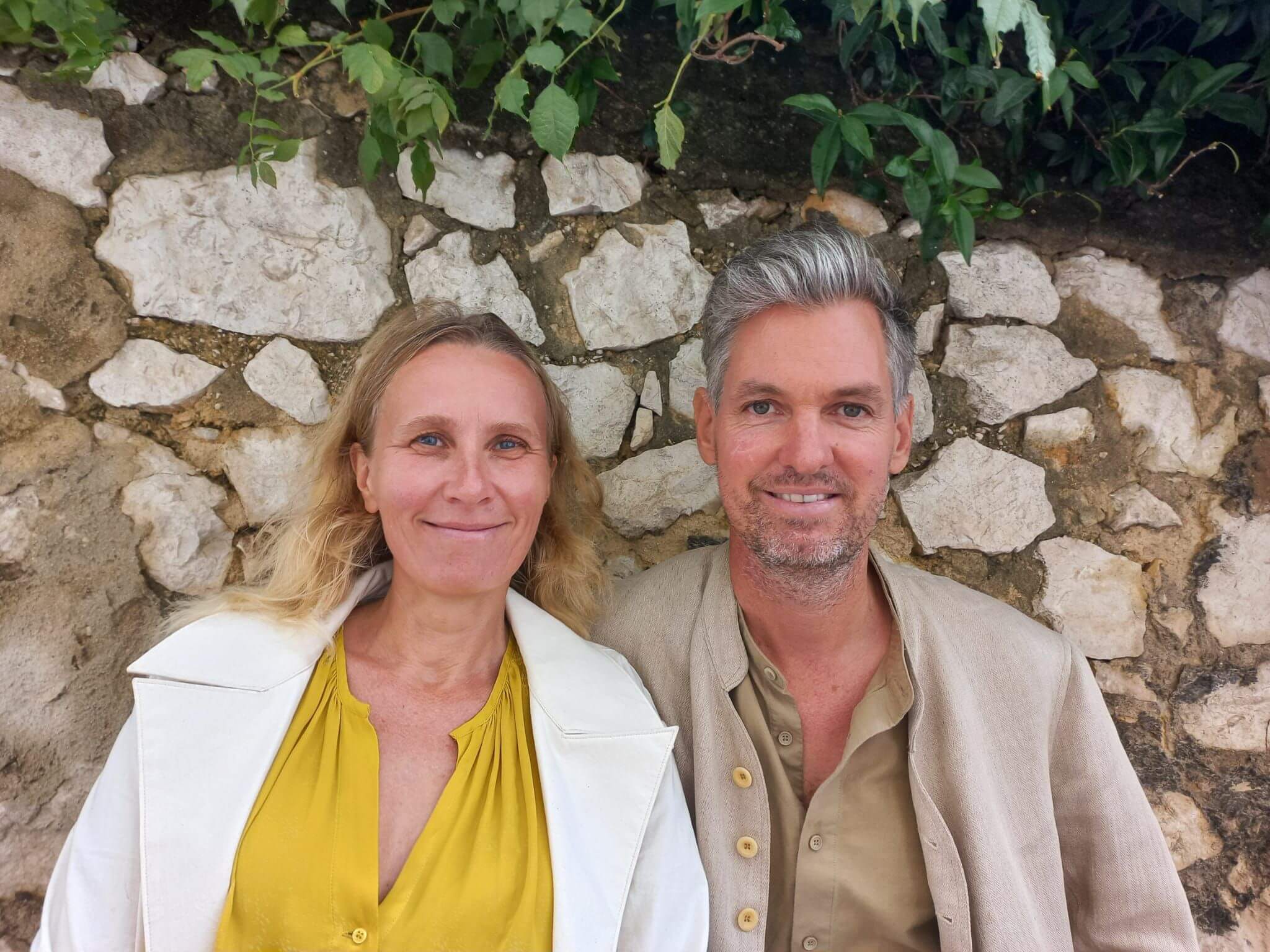
Recognizing that the future of sustainable development lay in Asia — and already familiar with the Vietnamese context — my wife and business partner, Tereza Zelenkova, and I made the strategic decision to relocate to Vietnam. Our goal was to bring our expertise in low-carbon, bioclimatic design to a region poised for rapid transformation.
The Idea
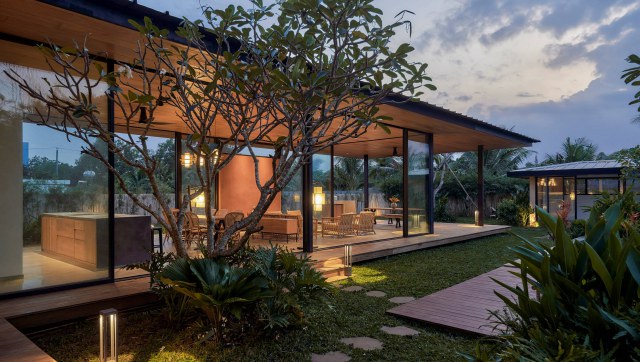
Through T3 Architects, we are shaping a new architectural ethos for the younger generation — one that embraces frugality as a strength. We design for the specificities of each locale: minimizing the need for air conditioning, sourcing materials locally to avoid unnecessary pollution, and reinventing a contemporary language that respectfully echoes vernacular roots, wherever the construction site may be.
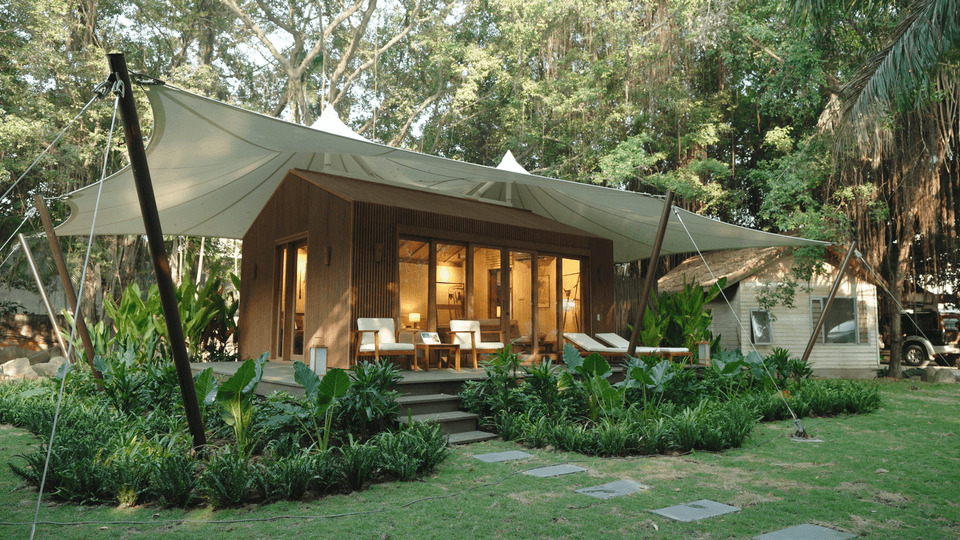
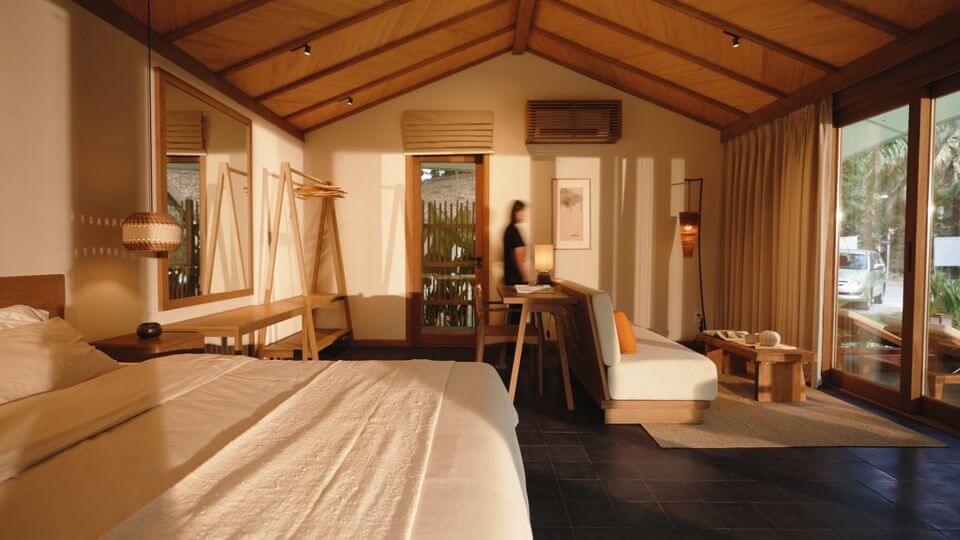
Our Kanopya Living project takes this philosophy further, offering a bespoke prefabricated lodge built to withstand the toughest conditions. With a robust timber structure and a vast tensile roof that serves as a protective canopy, these lodges are engineered for typhoons, humidity and heat. Yet beyond resilience, they offer a poetic experience — inviting guests to live between the comfort of a refined interior and the romance of covered terraces overlooking pristine natural wonders.
In Southeast Asia, the skyline often whispers of elsewhere: Western influences that, however glamorous, overlook a fundamental truth. A region’s future cannot be built by borrowing another’s past. Especially not when the climate is shifting and identity is at stake.
I have spent over twenty years championing a different voice — that of bioclimatic architecture, which I see as the only viable path forward, from the tropics to the temperate zones. My work here is a quiet revolution: demonstrating that design can be both deeply local and boldly forward-looking. It can keep people cool without draining energy grids, draw wisdom from vernacular traditions without falling into nostalgia, and nurture communities without erasing their heritage.
This is not about rejecting innovation. It is about choosing the right kind. I place my trust in low-tech, frugal solutions — approaches that are elegant in their simplicity and enduring in their impact. High-tech glitter, to me, is already fading. What endures is what belongs.
Getting Started
When we arrived in early 2011, our initial plan was to seek salaried positions within local architecture firms. But after each of us had inconclusive trial experiences, and following a first promising project opportunity, we quickly pivoted to setting up our own practice.
We chose to incorporate in Hong Kong. The process was remarkably straightforward at the time, and it allowed us to operate across Southeast Asia. T3 Architecture Asia was established there with just six emails and a single round trip to sign documents and open a bank account, on an initial capital of USD 10,000. Meanwhile, we kept salaried roles at a Vietnamese firm to secure our legal status, including work permits and residency cards.
We signed our first contracts, gradually grew the team from one employee to two, and in 2015 founded T3 Architecture Asia in Vietnam — a foreign-invested enterprise with 99% foreign ownership. The remaining 1% is held by our partner Thang, whom we deeply respect and consider a close friend. The startup capital was 200 million VND, roughly USD 10,000 at the time, drawn from our personal savings in France and transferred from our French bank to our Vietnamese corporate account.
Throughout the registration process we had the guidance of a local accounting firm that helped formalize every procedure. We encountered no major surprises, and it all proceeded smoothly. Our prior knowledge of the Vietnamese landscape, combined with a modest local network, proved invaluable in helping us make informed decisions — allowing us to move forward deliberately and to keep both our professional and personal evolution coherent and sustainable.
The First Six Months
Within six months of founding the firm we secured two projects that gave us our real start: the interior design of a high-end bar catering to Saigon’s affluent young elite, at the time the most profitable venue of its kind in the city, and the design of a 100-room bioclimatic hotel in Bagan, just as Myanmar was opening its doors to international tourism.
Our Burmese client, however, proved challenging when it came to payments. By the end of 2012 — twenty months after our arrival — we were on the verge of packing up and returning to France. Then, at the eleventh hour, the funds were finally released, allowing us not only to stay but to envision our next chapter. It is a reminder that success often hinges on fine margins, and on a steadfast belief in what lies ahead.
We were operating from home at the time, with two young daughters underfoot, and had just taken on our first employee — a French architect who had arrived in Vietnam days earlier and whom we hired the very next day, on nothing more than a handshake and a shared sense of purpose. Our priority was to keep overheads low, build the practice organically, and be highly selective: choosing clients who shared our ethical values and projects that could truly showcase our creativity and bioclimatic expertise.
This precarious yet exhilarating period lasted about a year. Only then did we begin to think bigger, starting with the decision to lease office space in Thao Dien, District 2. We had a strong intuition that the neighborhood would evolve into a vibrant hub for SMEs seeking growth without sacrificing quality of life, even in the midst of a bustling Asian metropolis like Saigon.
That experience taught us to screen clients carefully. We now turn down many hotel and residential projects that would damage the environment — ethics come first. We have also learned that in Asia and Africa a contract alone isn’t enough; trust is paramount. We conduct informal due diligence before signing. We always secure a downpayment before starting. And if a client’s behavior shifts negatively, we hold onto completed work until payment is confirmed. Fortunately, most of our clients are wonderful, and many become close collaborators who recommend us to their networks.
We require a downpayment of 15–20% of total fees before any design work begins. Our ideas have real value, and we consider it a red flag when a client expects free concept work — it signals they don’t appreciate what we bring. For Kanopya Living we require 55–60% upfront, because we must order all materials before prefabrication of the lodges can begin.
The Business Today
Today, in 2026 — fifteen years after founding T3 Architects — we operate three architecture firms across Asia (Hong Kong, Vietnam and Cambodia), have a branch in France (Kanopea Architecture Studio), and have just launched a startup based in Singapore (Kanopya Living).
Vietnam is our headquarters. It is the ideal hub for Southeast Asia and for global connectivity, and our Kanopya factory is in Saigon. Cambodia and France are small branches with local partners who collaborate on projects in those countries. Hong Kong is primarily a secretarial presence that allows us to sign international contracts — for projects in Mauritania, Myanmar, Mayotte and elsewhere — with no designers based there. Kanopya Living is run jointly from Vietnam and France, as one of our associates is based in France.
To be fully transparent, we have recently restructured in response to the shifting international landscape, our own lessons learned and, above all, our evolving personal aspirations.
T3 Cambodia is on hold. We found Vietnam more efficient and more profitable, with lower labor costs, higher skill levels and more reliable clients. Vietnamese architects are currently more skilled than their Cambodian counterparts, though Cambodia is catching up quickly, much as Vietnam did a decade ago. A senior architect at T3 in Saigon earns around 30 million VND per month, roughly $1,200 excluding insurance and bonuses, and is highly professional. For the same cost in Phnom Penh we could only hire junior-level talent. So we moved most design production back to Vietnam while keeping a small Cambodian team for client communication and on-site supervision — Phnom Penh is only a 45-minute flight from Saigon.
We have also put our French branch into dormancy. The current economic climate and the medium-to-long-term outlook for architecture in Europe no longer align with our philosophy, which champions both frugality and creative freedom. Hiring works differently in France, too: architects are typically employed on permanent contracts, which is risky in a cyclical business. We prefer to keep design production in Vietnam and maintain a French presence for client meetings, authorship supervision, insurance compliance and registration with the French Order of Architects.
This pivot has strengthened our international focus — not only across Asia, but now into Africa and the Middle East, particularly in high-end hospitality, where demand for environmentally responsible design is growing rapidly.
Unlike many firms, our goal has never been driven purely by financial returns. We have always sought a balanced life, harmonizing personal time — family, friends, leisure — with professional commitments, while consistently prioritizing project quality and nurturing humane, respectful relationships. That is why our annual revenue for T3 hovers around USD 400,000–500,000. We know this may seem unusual to businessmen focused solely on turnover, but for us success means combining fair, impactful work with a good life. We have never experienced burnout or needed substances to cope, and we plan to keep it that way.
Our design fees are calculated on the number of team members assigned to a project and the time required to achieve an optimal result, plus a margin to fund our growth and R&D. We do not use a percentage-of-construction-cost model. Fees range from $20,000 to $300,000 depending on scale and complexity. The design phase typically runs 3 to 7 months, from master planning and pre-concept through to detailed design for tender. Construction then takes anywhere from 3 to 24 months, with longer timelines for remote locations such as islands or sites with limited road access. Revenue breaks down to roughly 50% hospitality including F&B, 30% residential and 20% other sectors such as office and retail.
For growth and profitability, though, our greater expectations rest on Kanopya Living. That is exactly why we launched it: to sell a product rather than a service. You make more money selling timber and screws than selling creative design. Architecture and interior design are becoming increasingly competitive, whereas a prefabricated timber lodge carries a margin on every unit sold. We still offer custom designs for luxury clients who want something unique, charging reasonable design fees on top of the product margin.
The investment was on another scale entirely. We spent about $120,000 on R&D over 18 months to develop the design and engineering, working with several paid partners, then a further $120,000 to build a full-scale mockup lodge, completed in early 2026, to prove the concept was more than an idea. That prototype now stands at our partner factory in Saigon and is open to client visits. We launched Kanopya’s communications in April 2026 and are building a pipeline of leads and projects. So while setting up a design practice costs around $10,000 per branch, launching a product required $240,000 upfront — with far greater revenue and margin potential in return. We are passionate about both businesses, and they complement each other within our eco-design and eco-construction expertise.
Kanopya’s lodge sales are already generating new architecture commissions for T3, as clients appreciate having a single point of contact capable of handling everything from master planning through to construction handover. The future looks exceptionally promising, with active prospects in Vietnam, Mauritius, Rwanda, Guinea and Madeira.
Customers
Our clients come from remarkably diverse backgrounds, yet they are united by a common thread: they are drawn to T3, and now to Kanopya, by our expertise in low-carbon, timeless, creative and bioclimatic architecture. Equally important is our deeply humanistic approach to collaboration, which we deliberately keep far from overly corporate, sterile practice. A successful project rests first and foremost on trust and mutual respect between our firm and our clients.
Our portfolio reflects that diversity. We work with expatriate clients designing high-end, eco-conscious homes and F&B spaces, with local Vietnamese and Cambodian clients, and with international players — Dutch industrial firms, English investors, American corporations, Sino-Khmer banks. With Kanopya we are already in advanced discussions with hotel operators and with public and private investors across Africa, including Morocco, Senegal and Tanzania.
For architectural projects, Tereza and I handle most business development ourselves, supported by our website and social media. Clients choose us for our personality as much as our expertise, and we prefer to keep that connection direct. We deliberately avoid hiring business developers, because they tend to prioritize contract value over client quality and ethics. We value being an atelier rather than a soulless corporate studio. Our quality of life depends on the relationships we build with our team, our partners and our clients, so we keep control over who we work with. For Kanopya, our third associate — a close friend who shares our values — leads business development, particularly in Africa and the Middle East.
Meeting all these people, from such varied walks of life and sectors, is endlessly enriching. It is, after all, the essence of our beautiful profession: creating spaces where people truly feel good. This variety of briefs is what drives us every day, whether we are designing innovative offices, tree-top lodges, contemporary homes that breathe naturally without air conditioning, elegant cruise vessels, schools that inspire learning, or factories shielded by striking bamboo facades.
Competition
We operate in a niche segment, which means our competitors are relatively few. That said, the competition is fierce, and clients increasingly put us through rigorous pitch processes before choosing their architect. Since our expertise is not widely shared, we have to articulate our value proposition simply and compellingly to convince clients that we are the right partners to bring their vision to life.
The creative design sector is highly competitive worldwide, and it is difficult to generate strong profits while doing quality work. Eco-friendly architecture requires additional expertise, higher salaries and more time per project — yet it is hard to charge premium fees when competitors promise green solutions without delivering them. Clients often only see the difference at the end, and many regret choosing a cheaper firm once they compare the results with T3’s built projects.
Beyond that, word of mouth remains a powerful driver of new business. Every satisfied client and successful project opens the door to fresh opportunities, creating a virtuous cycle that fuels our organic growth.
In the high-end lodge market, very few players can master both the industrial dimension — serialized, prefabricated construction — and the creative finesse that luxury hospitality demands. Although Kanopya is a recent venture, that rare combination has granted us direct access to elite clients who are genuinely intrigued by our approach. Our growth prospects there are exceptionally bright.
Lessons Learned
Establishing an architecture firm in Vietnam was a turning point that profoundly and positively transformed my life. What started as a short-term family expatriation plan of three or four years turned into a twelve-year immersion in Saigon. During that time my family grew with the birth of our third child, I forged deep friendships, explored the region extensively, and built a professional network that ultimately drew me back to Vietnam after four years in France — a period I took to stay connected with my roots.
Today I consider Vietnam my second homeland, a sentiment that dates back to 1999, when I first discovered the country as an architecture student at Lund University in Sweden. It was love at first sight. Professionally, I have invested deeply in the local ecosystem: I have created jobs, trained numerous young Vietnamese architects in bioclimatic and low-carbon design at a time when few were paying attention to these issues, and built a practice that has become my primary professional activity.
On a personal level, my Vietnamese and expatriate friends have become a second family. I regret that legally I remain a temporary resident with a somewhat fragile status, despite having raised my family, built my career and contributed to the local community here. But I know that a significant part of my future will be written in Vietnam. It is where my heart is, and where I truly belong.
Tools
To stay connected with our teams, whether I am in Asia or Europe, I rely on a simple but effective toolkit: email, instant messaging platforms like WhatsApp, and video conferencing. These let me maintain a continuous and fluid dialogue with our offices regardless of time zones.
Our client base continues to grow organically — through word of mouth for projects in Vietnam, Cambodia and France, as well as through our websites (www.t3architects.com and www.kanopya-living.com) and our network of trusted partners. Rather than maintaining a one-size-fits-all structure, we assemble tailor-made teams for each project, selecting experts based on the specific requirements of the assignment. This lets us respond with precision and agility to our clients’ expectations.
Unlike firms that aim to internalize every skill and are therefore compelled to constantly expand or acquire other companies, my approach is different. I choose to excel and be recognized in a niche — bioclimatic architecture and high-end hospitality — and then collaborate with specialists who are equally distinguished in their own fields. This model keeps us lean, agile and highly responsive. It also ensures that my partners and I remain directly involved in every project, fostering close client relationships and allowing for attentive, hands-on management of our team, a close-knit family of about ten people.
Of those 10 to 12 people, 8 are long-term salaried employees. The remaining 2 to 4 architects work with us as partners on specific projects, based on their expertise. We also maintain a broad network of consultants whom we typically recommend to clients, building a dream team for each project. Typically we have 4 to 6 projects in the design phase, plus 1 or 2 under construction supervision or authorship oversight.
Resources
Staying at the cutting edge of our expertise rests on two complementary pillars. The first is hands-on experimentation with forward-thinking clients who are open to innovation — using rice-straw bales for roof insulation, for instance, a technique we have successfully implemented on real projects. The second is continuous professional training in France, which remains an exceptionally solid foundation for acquiring both theoretical knowledge and practical know-how in low-carbon construction and in bio-based and geo-sourced materials.
Beyond that, I am an active member of the Frugal Happiness and Creativity movement, for which I represent the Vietnam group. This is a global initiative reshaping the construction industry around a powerful motto: do better with less. The movement champions several core principles — prioritizing renovation over new construction wherever feasible, promoting natural materials and short supply chains, designing buildings genuinely adapted to the regional climates where we work, valuing human expertise over technology for technology’s sake, and building for the long term with a strong focus on the quality of experience for everyone who lives, works or studies in our buildings.
For me this isn’t just a professional philosophy. It is a commitment to creating architecture that is responsible, resilient and deeply human.
Advice For Founders
My first piece of advice would be to take the time to truly understand the Vietnamese people — their way of life, their mindset, their approach to negotiation. Don’t arrive as a conqueror. Come as a careful observer of the market, and start by listening and learning.
Vietnam offers tremendous opportunities, but it is essential that your business contributes to the country’s wellbeing and development without compromising the quality of life of future generations. Unfortunately, I have seen — and continue to see — far too many entrepreneurs coming here to sell what is no longer acceptable in Europe because of stricter environmental regulations: chemicals, harmful materials, junk food, single-use plastics, oversized vehicles, all at the expense of the long-term living environment of the Vietnamese people.
Consider this. Thirty years ago plastic was virtually unknown in Vietnam. Today the country ranks among the world’s worst polluters of rivers and oceans, simply because banana leaves, once used to wrap food, have been replaced by plastic packaging. It is a stark reminder of the consequences of short-term thinking.
To Vietnamese authorities and local partners, I would say: be selective. Choose businesses that bring genuine, lasting value to your country and its people — not just quick profits, but long-term benefits that consider the future.
And to foreign entrepreneurs, my message is simple. Only do in Vietnam what you would accept in your own country, next door to your own home. If we all applied that principle, it would naturally filter out the projects that do more harm than good.
What’s Next
Right now we are finalizing interior design supervision on a ferry boat in the UK’s Scilly Islands, working on detailed design for a luxury duplex apartment in Saigon, starting concept design for a 50-key eco-resort on a Vietnamese island, reviewing contractor bids for a small project at the French Consulate in Saigon, awaiting feedback on feasibility studies for two ecolodges in Senegal and one in Cambodia, waiting on a contract signature for a wellness resort in Morocco, and preparing a design proposal for an ecolodge in Vietnam’s Central Highlands. On the Kanopya side, we are negotiating projects in Vietnam, Rwanda, Guinea and Mauritius.
The future will be written through the expansion of our practice across Asia-Pacific and Africa, focusing on hospitality projects deeply integrated into their local landscapes — environmentally responsible, respectful of local communities, and rich with authentic regional identity. We have no interest in business as usual: soulless, flavorless, energy-guzzling developments that devastate natural or urban environments.
The present, with its accelerating climate disruptions from droughts and wildfires to floods, has already proven that our commitment to frugality and low-carbon design was not only timely but essential. This is undeniably the future of the construction sector, and I am confident that our expertise will be increasingly sought after.
Through Kanopya Living, we are also witnessing a quiet revolution in luxury hospitality. True luxury today is no longer about rare marble floors or gold-plated fixtures. It is about immersive natural retreats built from lightweight, prefabricated structures that leave no permanent scar on the landscape. We are moving toward what we call regenerative programs — projects that not only preserve existing ecosystems but actively enhance them, improving living conditions for local residents and wildlife and fostering biodiversity.
The goal is no longer to consume without consequence, but to enable guests, through their very stay, to contribute positively to a territory’s habitability while rediscovering wellbeing and zenitude away from the stress of urban life. Increasingly we integrate a wellness dimension into all our projects, whether resorts, offices or residential developments. Wellness is no longer an optional add-on. It has become a core component of every design, aimed at enhancing the wellbeing of users and honoring the integrity of the site.
Where To Find Them
We are always happy to connect. For architecture and interior design inquiries, you can reach us at contact@t3architects.com. For our prefabricated lodge solutions under Kanopya Living, please write to contact@kanopya-living.com.
To explore our portfolio and completed projects, visit www.t3architects.com and www.kanopya-living.com.
We would also be delighted to meet in person. Our main office is in Saigon at T3 Architects Office, 28 Thao Dien Street, Family Garden, Thu Duc City, Ho Chi Minh City, Vietnam. For those based in or travelling to France, we are regularly available in Paris, Marseille and Brittany, so don’t hesitate to reach out.