Background
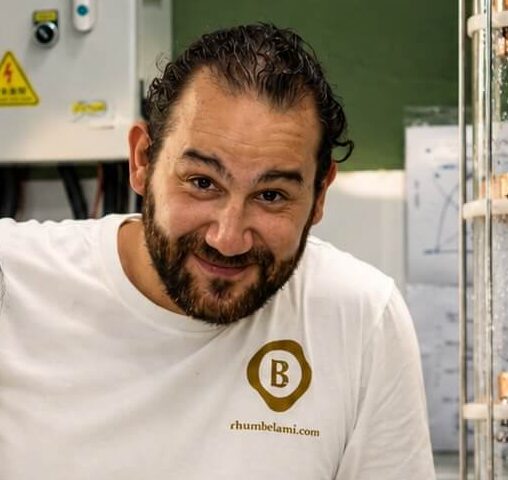
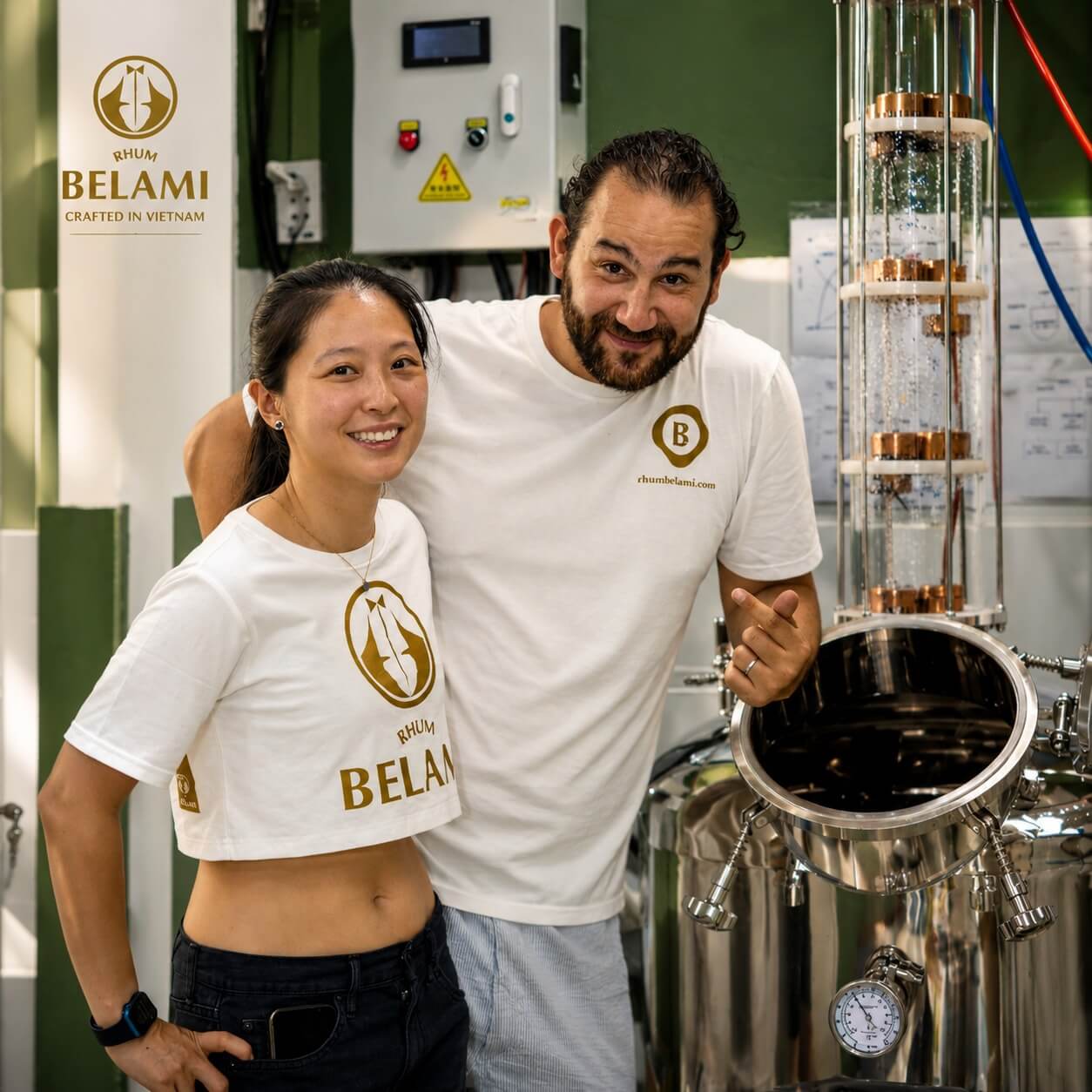
I am Roddy Battajon, founder and Master Distiller of RHUM Belami, which I built in Ho Chi Minh City together with my Taiwanese co-founder and partner, Cheng Chen Yi.
My relationship with hospitality began unusually early. Over the years, I worked through almost every level of the food and beverage industry: Michelin-level restaurants in Paris, underground speakeasies, cocktail bars, independent restaurants, large hospitality operations, holiday resorts, events, menu development, food pairing, management and staff training.
That journey taught me two apparently opposite disciplines. Michelin Fine dining taught me precision, obsession with detail and the importance of emotion. High-volume hospitality taught me organisation, consistency, speed and survival. Both became essential when I started a distillery.
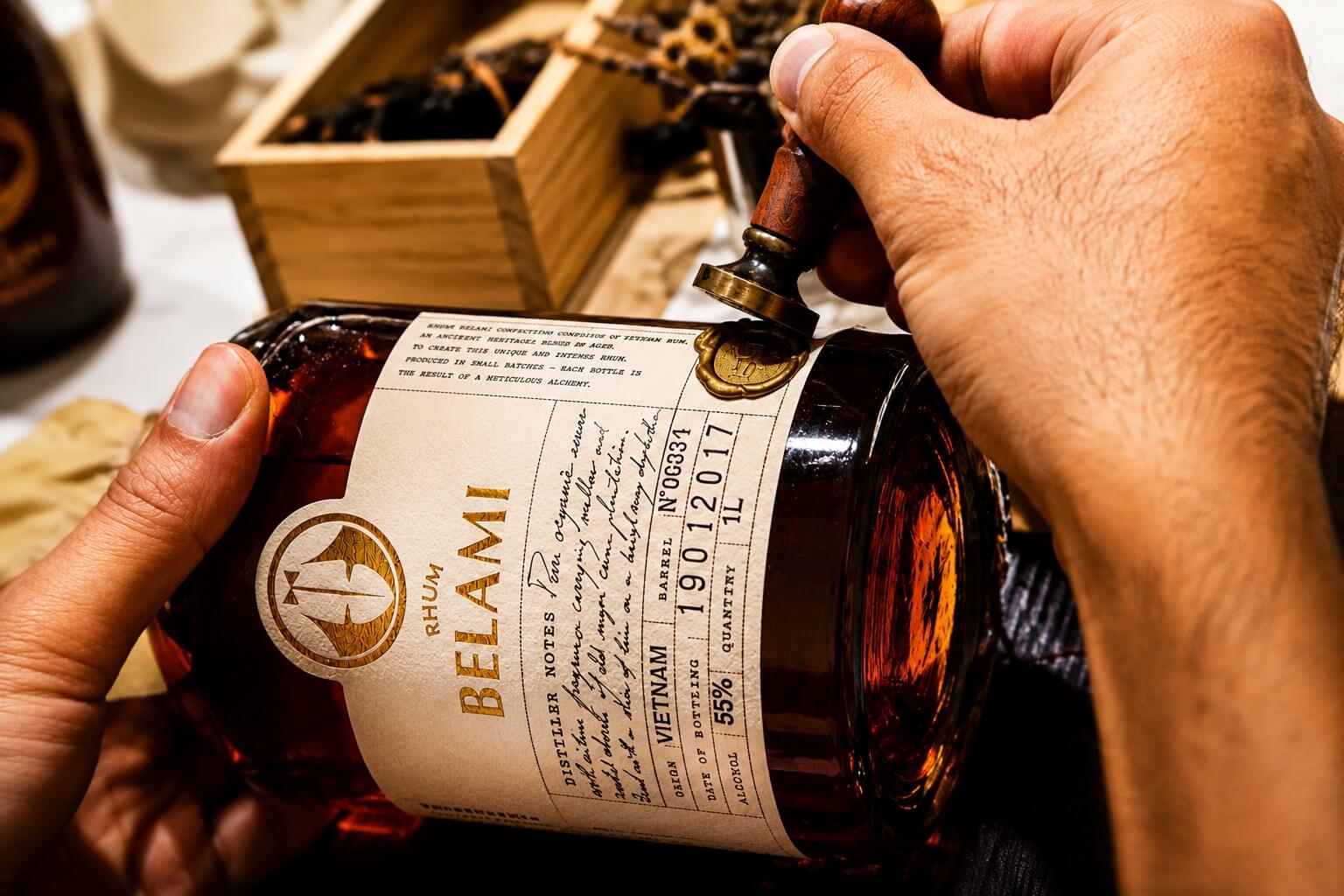
When Belami began, “founder” was not an honorary title. I developed the fermentations, distillation methods, maturation systems, recipes, cocktails and food pairings. I filled the bottles myself, wrote and applied the labels, sealed the bottles by hand, organised tastings, created the marketing, managed communication and sometimes delivered the orders personally.
On the same day, I could be the Master Distiller, bottler, designer, bartender, trainer, salesperson, delivery driver and event producer.
Chen Yi brought complementary strengths that I did not possess at the beginning. Her Taiwanese perspective, organisational abilities, commercial understanding and international coordination helped transform an intense creative project into an operating company. She contributed to supplier research, packaging, administration, exports and the development of our relationships in Taiwan.
Because we had limited resources, we had to place all our abilities into one system. Belami grew from that synergy: my experience in hospitality, fermentation, distillation and creative direction combined with Chen Yi’s operational, organisational and international strengths.
Today, the company has a wider team and more structured systems, but the original philosophy remains. Belami is still a founder-built house whose leadership has personally experienced every stage of the process, from receiving the sugarcane to presenting the finished Rhum to a guest.
What we built is more than a distillery. Rhum is the centre, but around it we are creating an entire world of gastronomy, coffee, art, fashion, fermentation, design, travel and hospitality.
Why This City
Ho Chi Minh City gave me the feeling that something completely new could still be built from almost nothing.
The city had movement, possibility, imperfection and a kind of controlled chaos that matched my personality. Vietnam was developing quickly, but there was still space for ideas that did not fit neatly into an existing category.
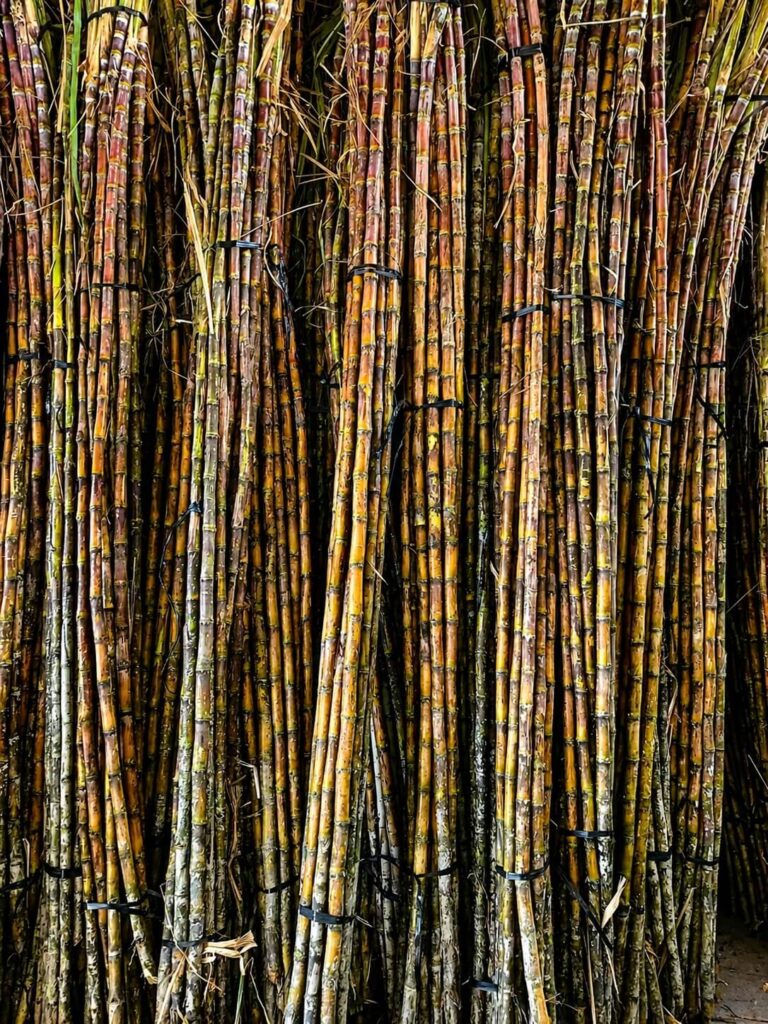
When I tasted fresh sugarcane juice in the street, I saw an extraordinary agricultural ingredient that was part of everyday Vietnamese life, yet had not been fully expressed through a premium local spirit.
My Caribbean roots gave me an emotional connection to Rhum. My French hospitality background gave me the technical and operational discipline to approach it professionally. Vietnam provided the sugarcane, climate, energy and opportunity to create something different.
I did not come here to reproduce a Caribbean Rhum and attach a Vietnamese label to it. I wanted to create a Rhum that could only exist here: Vietnamese black sugarcane, tropical fermentation and maturation, Caribbean memory, French precision and Saigon terroir.
I am not Vietnamese, and that creates a responsibility. If this country provides the agriculture, people, inspiration and ecosystem supporting my company and my family, then the business must respect it rather than simply extract value from it.
The Idea
The emotional origin came from family, food and the memory of Caribbean Rhum.
The commercial opportunity appeared when I understood the potential of Vietnamese sugarcane. An exceptional raw material was present, but it had not yet been expressed through an internationally positioned premium agricole Rhum.
I did not validate the idea with a PowerPoint presentation. I validated it by making Rhum.
I tested different sugarcane sources, yeast conditions, fermentation durations, ester development, distillation cuts, botanicals, barrels and maturation systems. Some experiments became products. Others became expensive lessons, but every failure produced information.
Then I brought the liquid to chefs, bartenders, sommeliers, hospitality professionals and customers. Their first reaction was often disbelief that something with that identity had been produced in Vietnam.That surprise revealed the opportunity. Belami was not simply entering an existing market. It was helping create a new category.
The question was no longer: “Can Vietnam produce premium Rhum?”
It became: “How far can Vietnamese Rhum go?”
Getting Started
It took approximately USD 200,000 across the opening and development period, but the real starting capital was persistence, time and resourcefulness.
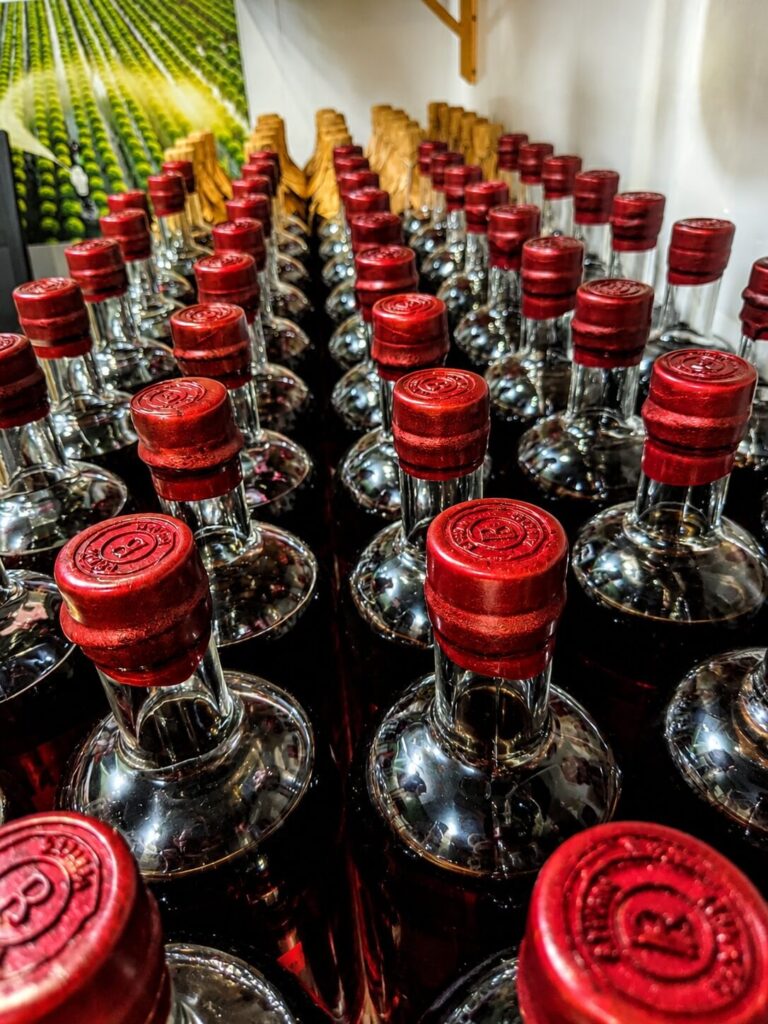
Belami did not begin with a complete factory, a large team and suppliers ready to support small volumes. Minimum order quantities were one of our first major challenges. Bottle suppliers wanted quantities that were impossible for a young distillery. I searched everywhere for recyclable bottles, specialist closures, labels and packaging that could be purchased in small quantities. I visited suppliers personally, collected and cleaned glass, tested corks and developed temporary solutions until the business could scale.
I was simultaneously handling research and development, sourcing, fermentation, distillation, maturation, bottling, design, marketing, sales, events, deliveries and customer relations. Every early sale financed the next improvement. That beginning made the company unusually resilient. I know what every component costs, what can fail, what can be repaired and what must never be compromised.
It also taught me that creativity without systems eventually becomes chaos. That is why we progressively introduced HACCP procedures, traceability, written recipes, production logs, inventory controls and software tools.ant section.]
The First Six Months
The first six months were not elegant. They were a continuous cycle of producing, correcting, cleaning, sourcing, presenting, delivering and reinvesting.
I could spend the morning monitoring a fermentation, the afternoon searching for closures, the evening presenting RHUM to a restaurant and the night redesigning a label or calculating the next production run. Crafting was not as effecient as nowadays 1 bottle took nearly few hours to an entire afternoon just to be handcrafted. Now Its still taking 45 min for a full craft but at least we have a proper station with tools and enough materials to support regular international exports.
Hiring was difficult because the work did not fit neatly into one job description. A small distillery requires technical discipline, physical work, flexibility and an understanding that quality cannot depend on whether the founder is standing beside the tank.
The greatest surprise was that making an excellent liquid was only the beginning.
Packaging, licences, taxation, storage, breakage, humidity, aging losses, cash-flow timing and supplier minimums could each become as important as fermentation and distillation.
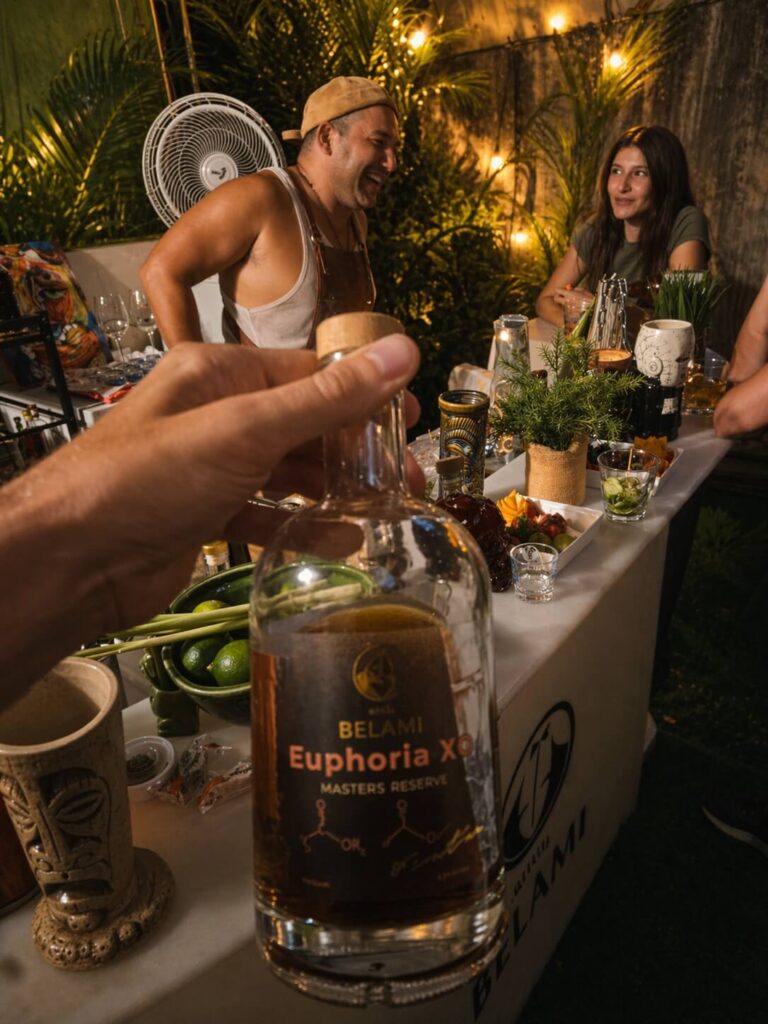
The positive surprise was the hospitality community. Chefs and bartenders understood the product quickly. They showed us that Belami could live beyond the bottle through cocktails, food pairings, exhibitions and experiences.
That gave the brand a cultural life before it had a conventional advertising budget.
The Business Today
Today, Rhum Belami operates between artisanal production and controlled semi-industrial scale.
The handmade core remains essential, but the company now uses documented recipes, production controls, traceability, structured procurement and scalable commercial systems.
Depending on export cycles, distributor programmes, OEM projects and available capacity, our activity can represent approximately 20,000 to 70,000 bottles during strong years.
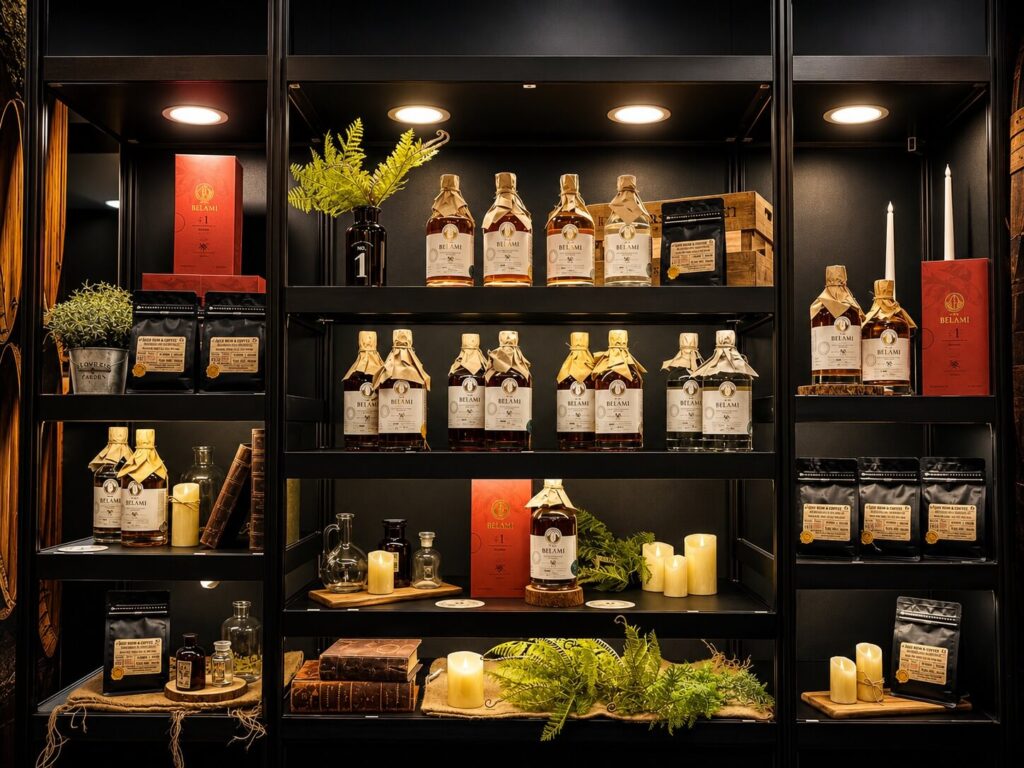
We operate a micro-distillery, creative laboratory and private showroom in Ho Chi Minh City, supported by approximately 10 people across production, administration, exports, commercial development, events and specialist projects.
Revenue is naturally cyclical. Domestic sales, hospitality accounts, private events and direct customers provide recurring activity, while export shipments and distributor orders can transform an individual month. The economics differ considerably by channel. Export Rhum can generate a net return while Domestic activity currently functions mainly as visibility and market presence because the tax structure is applied against the selling price. Increasing the price therefore also increases the tax burden; price alone cannot solve the economics.
Belami is not a simple production-and-sale business. Older RHUM requires capital to remain inside barrels. Our aging process includes ongoing barrel care, botanical work, stock management and evaporation. Packaging, compliance, export documentation, events and international development consume resources before producing revenue.
Operationally, it can feel like running a Michelin kitchen attached to an alcohol company.
We are not producing industrial Rhum to cook crêpes. Every detail costs something.
Legacy remains one of our flagship and best-selling expressions. Its true cost cannot be reduced to the price of the liquid and bottle. It includes maturation, botanical preparation, barrel maintenance, storage, labour, compliance, taxation, packaging, distribution and freight.
Depending on the market and channel, Belami bottles can be bought from approximately €70 to more than €150, with rare and limited editions positioned higher.
The company survived COVID, supply-chain disruption, packaging shortages, taxation pressure and repeated changes in the operating environment.
We are still independent, still producing and still expanding internationally. That resilience is part of the value of the company.
Customers
Belami initially grew through direct relationships and word of mouth.
I visited restaurants, hotels, bars and exhibitions, poured the Rhum personally and explained the fermentation, sugarcane and production behind it.
Chefs, bartenders and sommeliers became some of our earliest advocates because they understood both the technical quality and the creative possibilities surrounding the product.
Social media, international awards, press, trade fairs, exhibitions and founder-led events later expanded the audience. But personal recommendation remains extremely powerful.
Premium spirits are built through trust, and trust travels from one chef, bartender, collector, traveller or independent retailer to another.
Our customers include Vietnamese premium consumers, expatriates, tourists, collectors, chefs, bartenders, luxury hotels, resorts, fine-dining restaurants and international distributors.
We have also welcomed MBA students and professional groups visiting Vietnam. Some returned to Canada, the United States, Sweden and other markets carrying bottles and introducing Belami to people we had never met.
It is extraordinary to discover an article about your Rhum written in a language you cannot understand, or to find an independent caviste in Toulouse, Grasse, Montpellier or another European city explaining Vietnamese agricole Rhum to customers on the opposite side of the world.
These independent retailers protect discovery. They create space for products that do not have the largest corporate advertising budgets or the most aggressive commercial agreements.
At the beginning, people were surprised that premium Rhum could be produced in Vietnam. Today, they ask about sugarcane varieties, Brix, yeast, ester levels, long fermentation, barrels and tropical maturation.
That evolution shows that the market is becoming more informed and more curious.
Competition
We compete for attention with imported agricole Rhum, Caribbean aged Rhum, Asian craft spirits, whisky, tequila and other premium beverage categories.
But very few companies combine fresh Vietnamese sugarcane, proprietary high-ester fermentation, tropical maturation, gastronomy, visual art, fashion, design and founder-led hospitality experiences.
Our competitive advantage is cumulative. It is not one secret ingredient.
It is ten years of fermentation records, yeast cultures, recipes, aging stocks, supplier knowledge, operational mistakes, hospitality relationships, international awards, brand assets and market experience.
Anyone can buy an alambic. They cannot buy the decade of decisions required to understand what to do with it.
Customers choose Belami because the liquid is distinctive, but also because it belongs somewhere.
It is not generic Caribbean imagery attached to an Asian product. The sugarcane, climate, energy and contemporary identity are Vietnamese.
Belami offers authenticity and surprise. People recognise the category, but experience it through a flavour and cultural perspective they did not expect.
Lessons Learned
I learned that entrepreneurship is not primarily about freedom. It is about responsibility.
You become responsible for employees, suppliers, customers, partners and the country in which you operate.
We survived COVID and continued respecting Vietnamese regulations through enormous operational pressure. I believe in clear rules, responsible alcohol production and paying what is legally required.
What smaller producers need, however, is sufficient transition time and economic oxygen to adapt. Independent companies cannot absorb major changes as easily as corporations with vast reserves and negotiating power.
When taxation is calculated against the selling price, raising the price does not fully solve the problem because the tax rises with it. Once compliance, distribution, VAT, rent, salaries, packaging and production are added, domestic Rhum can become almost impossible to operate as a genuine profit centre.
There is a dark irony in winning international medals for Vietnam and then spending the next morning calculating whether the tax attached to the winning bottle leaves enough money to pay the people who helped make it.
That is not an argument against rules. It is an argument for preserving space for independent producers, local agriculture and genuine craftsmanship.
I do not want future consumers to inherit a world where the only visible choices are Captain Morgan, Kraken and the same global portfolios repeated everywhere.
Consumers deserve discovery, diversity and products made by people who remain personally accountable for what is inside the bottle.
I have also learned that parts of the drinks industry have spent years marketing more aggressively than they have been listening.
Beautiful packaging, sweetness, colouring and convenient storytelling can create an impression of maturity or quality without enough transparency about the liquid itself.
I believe the market is changing, the new generation is not necessarily rejecting alcohol. It is rejecting repetition, artificiality and products created primarily to occupy another position in an already overcrowded catalogue.
People may drink less frequently, but many want to drink better.They want identity, transparency, natural ingredients and a reason for the product to exist.
Building Belami also changed the way I see myself. I began by trying to make Rhum. Eventually, I understood that I was constructing a language made from flavour, colour, movement, memory and place. Painting, distillation, hospitality and storytelling are no longer separate activities for me. They are different methods of creating the same emotion: the feeling of being pleasantly destabilised, surprised and more alive.
Tools
I rely on a combination of traditional production discipline and tools developed internally. My past life coding in python and trying to decipher c++ language still helped me when I had to cross coding program and protection systems around the belami process and maintenance. These include HACCP procedures, fermentation and distillation logs, batch traceability, ingredient and bottle inventory, barrel records, quality-control checklists, accounting records, production planning and distributor reporting. I also created custom programmes for production counting, bottle allocation and stock monitoring because I needed the distillery to remain healthy even when I was not physically controlling every movement.
Technology helps, but discipline matters more than software yet im quiet proud of it i even name it “Cain” the interface is obviously not sexy but it is a serious help when you need to analyse the yield on diferent cane variety, include weather analyse and it can be very helpful to act like a safeguard. In a distillery, memory is not a system. Every ingredient movement, batch decision and quality checkpoint must be recorded. For the commercial side, we use our website, social media, digital catalogues, trade events, email, distributor relationships and direct customer engagement. But the most valuable tool remains an accurate production history.
Resources
Anthony Bourdain was an important influence because he never treated food and drink as decorative subjects.
He used them to understand people, cultures, contradictions and identity. He showed that hospitality could be emotional, intelligent, political, funny and sometimes uncomfortable at the same time.
I have also learned enormously from chefs.
Peter Cuong Franklin at Ănăn Saigon, Hervé Rodriguez, Chef Vanessa at Ephernité in Taiwan and the many Michelin-level chefs I have met or collaborated with changed the way I think about precision, balance, texture and emotion. A chef does not only ask how a spirit was produced. A chef asks what happens when it meets smoke, acidity, fat, temperature, fermentation or a particular memory.
Bartenders have also been essential teachers.I have worked with award-winning bartenders, international trainers and beverage professionals who came to Vietnam to share their knowledge. They taught me that a cocktail is never simply a recipe. It is a complete system involving sourcing, preparation, timing, temperature, profitability, service and the aroma perceived before the guest takes the first sip.
I also learn from distillers, soju producers, chemists, botanists and fermentation specialists. Meeting people producing rice spirits encouraged me to develop our truffle soju: a rice-and-barley-based spirit combining traditional foundations with truffle umami, our yeast cultures and the ester architecture developed over ten years.
To the best of my knowledge, it remains unique, nobody was crazy enough to start producing such hybrid spirit. Although bottled at 45% ABV, its balance makes it feel considerably softer while retaining enough structure for Western palates accustomed to more powerful spirits. I believe this kind of hybrid can help European and North American drinkers rediscover soju and rice spirits through a flavour language they understand more immediately.
Scientific reading is another major influence.I study yeast stress, esterification, microbiology, long fermentation, botanical extraction and the relationship between agricultural genetics and flavour.
One of my long-term ambitions is to select or develop our own sugarcane hybrids, targeting more than 25 Brix while maintaining agricultural resilience, aromatic complexity and excellent distillation yield.
I want to understand the process from the genetics of the sugarcane to the final sensation in the glass.But some of my greatest influences are people I did not know before they encountered Belami.
One morning, because of the time difference, I woke up to a message from two young men I had guided through the distillery about a year earlier.
They told me that the experience had changed their perception of how extraordinary Rhum and drinks could be. One had since taken ownership of a Caribbean and agricole Rhum bar and employed the other as a bartender.
After one of their most profitable weeks, they opened the bottle of Belami Legacy I had given them to celebrate.
Their message ended:
“Thank you for everything and Long Live Belami.”
That is one of the true blessings of this work. A bottle may be consumed in one evening, but the curiosity it creates can remain for years. It can lead someone toward a new profession, a new business or a different direction in life. Painting can quietly place an emotion inside someone. Sometimes a Rhum can do exactly the same thing.
Advice For Founders
Do not confuse accessible entry costs with an easy market. Vietnam rewards energy, humility and adaptability, but it punishes assumptions.Understand licences, taxation, supplier minimums, cash-flow timing and local relationships before committing.
Start smaller than your ego wants, but document the business as though it will become international.
Build something people reorder, not merely something they photograph once.
Keep enough cash and emotional energy for the problems nobody included in the original business plan. Most importantly, bring your experience without assuming that being foreign automatically makes your ideas superior. The opportunity lies in combining what you already know with what Vietnam can teach you and do not wait for perfect conditions. Perfect conditions rarely arrive. The real question is whether the idea matters enough for you to continue when the conditions are terrible.
What’s Next
The next chapter is controlled international scale without removing the soul of the company. We are developing stronger distribution across Asia, Europe and eventually North America while preserving the handcrafted identity that made Belami valuable. Our commercial programmes can range from limited gastronomic releases to distributor projects of 10,000, 20,000 or more bottles.The objective is not volume at any price. It is to select partners capable of protecting the brand, paying correctly and building a market over several years.
Product innovation
Customers and partners who appreciated our Rhum repeatedly asked whether we could bring the same approach to other categories. That curiosity led to truffle soju, premium kosher cane-and-potato vodka, Tropical Negroni, coffee-based cocktails, ready-to-drink and ready-to-serve programmes, longer fermentations and experimental botanical projects.
I do not want to flood the market with products created simply to fill a catalogue.
When I develop a coffee martini, I begin with the coffee itself: origin, green bean, conditioning, Rhum interaction, roasting, extraction, texture and stability.
A bottled cocktail should not taste like a watery, pasteurised memory of something served at a bar. Convenience should not require surrendering quality.
Our work with KOI Café and KOI Thé reflects the same philosophy. Their respect for tea, coffee and local ingredients encouraged me to push the limits of ready-to-drink and ready-to-serve formats.The objective is not to add alcohol to an existing beverage and call it innovation. It is to reconstruct the complete experience from the ingredient upward.
I am also exploring an elevated plum liqueur inspired by umeshu. I discovered an exceptional bottle during an omakase dinner in Saigon and drank it throughout the evening because its balance and service were almost perfect. My immediate reaction was: this could become extraordinary in Europe, but it still needs one unexpected twist.That missing twist is normally where my work begins.
Maisons des Curiosités by Belami:
My long-term ambition is to create a house made for 5 sens discovery by Belami in selected international cities.These would not be conventional alcohol stores. They would be physical expressions of the complete Belami universe: part tasting room, part gallery, part design boutique, part experimental laboratory and part cultural meeting place. Visitors could discover Rhum and limited editions, Rhum-conditioned coffee beans, freshly served coffee martinis, bottled cocktails, infused cigars, paintings, fashion, sugarcane-fibre caps, pineapple-based alternative leather goods and soaps created from fermentation-related materials and botanicals. The purpose is not to place the Belami logo on unrelated merchandise.
Each object must begin with a real material, craft, waste stream or sensory experience connected to the distillery.
Sustainability and circular production:
A distillery consumes energy, water, agricultural material and packaging.
Pretending otherwise would be dishonest.
As a foreign entrepreneur producing in Vietnam, I feel a responsibility toward the ecosystem that supports the company, my employees and my family. Vietnam has changed enormously during the decade I have lived here. Cleaner transport, environmental awareness and circular production are becoming much more visible.I want Belami to contribute to that direction. Our objective is to recover more value from sugarcane fibre, fermentation residues, fruit, botanicals, coffee, packaging and event materials. Sustainability should not be a sentence printed on the back of a box.It should create useful products, reduce waste, generate healthier margins and support local employment.We hope to obtain investment and institutional support, including potential European circular-economy and bioeconomy funding, to develop this ecosystem as a model that can expand across Asia.
International integration:
Taiwan provides an excellent model for how Belami can enter a country without losing its identity.The Rhum is not simply shipped to a distributor and left on a shelf. It becomes part of local tastings, national events, fine dining, sommelier programmes and cultural collaborations. That is the model we want to adapt to Spain, Italy, the Netherlands, the Nordic countries, Canada, the United States and future markets.
Each country should interpret Belami through its own ingredients, chefs, bartenders, artists and traditions rather than receiving an identical campaign designed somewhere else.
Before opening permanent concept like a “Maisons des Curiosités” we intend to test the concept through a travelling Belami Tour. The tour would cross selected cities and bring together fine dining, Rhum pairings, cocktails, paintings, fashion, fermentation, local ingredients and independent retailers.
A dinner in France should not be identical to one in Taiwan.A coffee creation in Italy should not be developed exactly like one in Vietnam.The Belami identity remains constant, but every experience should absorb something meaningful from the place it visits.
Investment and scale:
The company has reached a stage where creativity alone is no longer sufficient.
We have accumulated international recognition, distributor interest, word of mouth, product opportunities and more projects than a micro-structure can responsibly execute at the same time.
We cannot behave forever like the small newcomer when we are beginning to work with Michelin-level gastronomy, international hospitality, fashion, coffee, RTD programmes and larger export projects.
The next investment is not intended to turn Belami into anonymous mass production.
It is intended to provide the people, equipment, licensed capacity, working capital and structure required to enter a larger arena without losing the human hand behind the brand.
The future does not belong to the company with the fullest catalogue. It belongs to the company capable of making people taste something familiar and suddenly experience it as though it were completely new.
Where To Find Them
Website: rhumbelami.com
Email: info@rhumbelami.com
LinkedIn: Roddy Battajon / Rhum Belami
Behance: behance.net/roddybattajon
Location: Rhum Belami Distillery, Moonshiner LTD – Ho Chi Minh City — visits by appointment.